
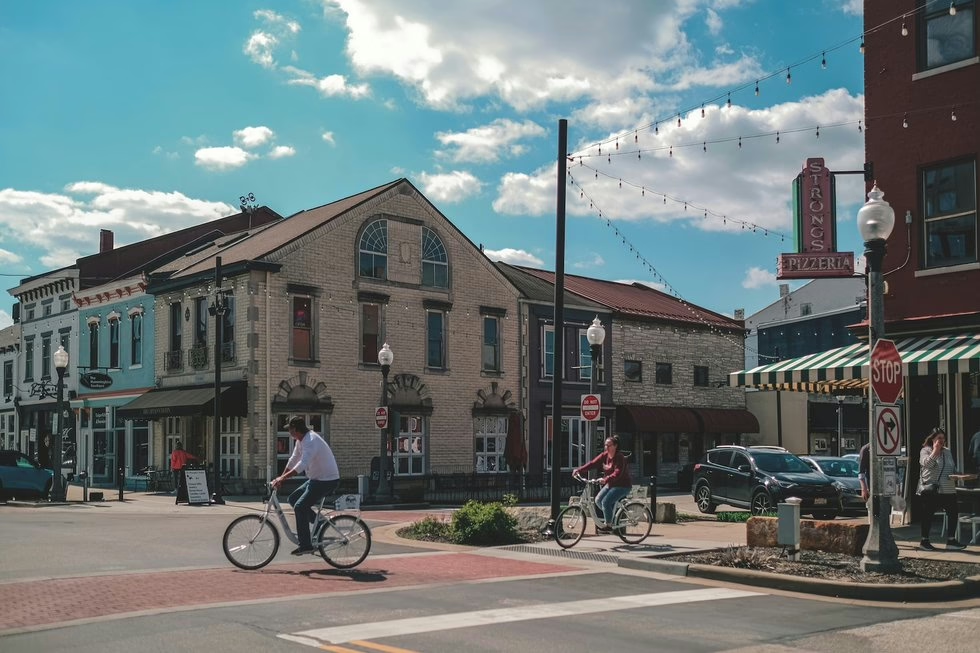
Every town in America has a story it tells itself.
It lives on bronze plaques in the town square.
It echoes through school history lessons.
It’s repeated during annual parades, festivals, and heritage celebrations.
It becomes part of identity — the shared narrative of brave pioneers, honest labor, and community spirit.
But what happens when that story isn’t wrong because it’s incomplete —
But because it was carefully constructed to hide something else?
This isn’t a story about treasure.
It isn’t about gold or lost riches.
It isn’t about myths or legends.
It’s about paperwork.
Ledgers.
Records.
Ink on aging paper.
And how a routine construction job quietly rewrote the meaning of an entire town’s history.
The Dig That Was Supposed to Be Ordinary
The project wasn’t meant to be special.
It was just another downtown redevelopment.
Another old structure is being cleared.
Another foundation was removed to make way for something modern.
The property held a decaying estate from the 1920s — nothing historically remarkable on the surface.
The goal was simple: clear, dig, build.
Then, at 11:30 in the morning, the excavator hit something that didn’t feel like rock.
Didn’t sound like concrete.
Didn’t behave like a brick.
The machine stopped.
The site went quiet.
Dust settled.
And 15 feet beneath the surface, something unnatural emerged from the earth.
Not debris.
Not pipes.
Not broken infrastructure.
A heavy iron chest.
Wrapped in chains.
Sealed.
Buried under layers of foundation, brickwork, and packed soil.
Not hidden carelessly.
Not lost accidentally.
Intentionally entombed.
When a Locked Box Creates Silence?
There’s a universal instinct when people see something sealed, locked, and buried deep underground. This wasn’t curiosity — it was tension.
Because people don’t bury iron chests in chains for harmless reasons.
Work stopped.
Authorities were contacted.
The site was secured.
This wasn’t treated as a curiosity, it was treated as a potential risk.
And when the decision was made to open it, no one expected history.
They expected valuables.
Heirlooms.
Metal.
Artifacts.
What they got instead was paper.
Three leather-bound ledgers.
Carefully wrapped in oilcloth.
Preserved.
Protected.
Intact.
At first glance, it looked disappointing.
Until someone started reading.
The Names Everyone Recognized
The shock didn’t come from what the books were.
It came from whose names were written inside.
Names from statues.
Names from schools.
Names from plaques.
Names from town streets.
Names from official local history.
The town’s founders.
The respected figures.
The celebrated builders.
The so-called pioneers of the community.
Men remembered as visionaries.
Leaders.
Community builders.
Architects of prosperity.
But the ledgers weren’t diaries.
They weren’t memoirs.
They weren’t reflections.
They were off-the-books financial records.
And the transactions recorded inside them didn’t describe progress —
They described control.
The History Everyone Learned Was Clean
The official version of events was simple and reassuring.
Original landowners sold their land willingly in the late 1800s.
Wealthy industrialists purchased it legally.
The town developed naturally.
Growth followed opportunity.
Prosperity followed planning.
A peaceful transaction.
A clean transfer.
A celebrated beginning.
That story had been taught for generations.
It was neat.
It was respectable.
It was comfortable.
And it wasn’t true.
The Other Story Hidden in Ink
The ledgers told a very different narrative.
Not of cooperation — but pressure.
Not of agreement — but manipulation.
Not of progress — but removal.
The records detailed:
• Secret payments
• Unrecorded land transfers
• Bribes to officials
• Payments to intimidate families
• Coordinated displacement
• Forced financial pressure
• Strategic land seizures
The land wasn’t bought fairly.
It was taken methodically.
Families weren’t relocated —
They were pushed out.
Deals weren’t transparent —
They were engineered in secrecy.
The most valuable land — near rivers, railways, and trade routes —
was systematically absorbed.
Not through contracts alone.
Through influence.
Pressure.
Fear.
Power.
When Founders Stop Looking Like Founders
The men remembered as builders of the town weren’t operating as pioneers.
They were operating as a coordinated network.
Not random opportunists —
but organized planners.
Not impulsive decisions —
but a structured strategy.
The ledgers showed planning, documentation, accounting, tracking, and coordination.
This wasn’t chaos.
It was structured.
It was methodical.
It was organized.
It was deliberate.
And that’s what made it impossible to dismiss.
Why the Documents Were Buried, Not Burned
If someone wanted to erase evidence, they could have destroyed it.
Burned it.
Destroyed it.
Shredded it.
But these ledgers were preserved.
Wrapped.
Protected.
Locked.
Buried.
Sealed.
Hidden under a foundation.
Which suggests something deeper than fear.
It suggests control.
Someone didn’t want them discovered —
but also didn’t want them destroyed.
They were too valuable.
Too detailed.
Too important.
They weren’t trash.
They were records.
When the Past Meets the Present
The discovery didn’t just affect history books.
It affected people.
Because the founders’ descendants still lived in the town.
They weren’t just names in archives.
They were:
• Business owners
• Council members
• Property holders
• Community leaders
• Political figures
• Influential families
Their wealth wasn’t abstract.
It was traceable.
Line by line.
Property by property.
Record by record.
Ledger entry by ledger entry.
And suddenly, prosperity had a paper trail.
The Silence That Followed the Discovery
No town meeting begins with shouting.
It begins with quiet.
With confusion.
With disbelief.
With denial.
With discomfort.
Because confronting history isn’t dramatic at first — it’s destabilizing.
People don’t argue immediately.
They process.
They absorb.
They question.
They resist.
They struggle.
Because identity is tied to story.
And the story is tied to pride.
When Community Memory Collides With Evidence
For decades, displaced families had stories.
Stories passed down quietly.
Whispers in kitchens.
Conversations behind closed doors.
Accounts dismissed as bitterness.
Memories labeled as resentment.
Now those stories had documentation.
Ink.
Paper.
Records.
Dates.
Names.
Transactions.
Not opinions.
Evidence.
Not rumors.
Receipts.
Statues Don’t Change — Meaning Does
A statue doesn’t move.
But its meaning does.
What was once a symbol of leadership becomes a symbol of complexity.
What was once an honor becomes a contradiction.
What was once pride becomes discomfort.
Nothing physical changes.
But everything emotional does.
Why This Story Feels Bigger Than One Town
This isn’t just about one discovery.
It’s about how history is shaped.
Who records it?
Who controls it?
Who preserves it?
Who buries it?
Who benefits from it?
Because history isn’t just what happened.
It’s what survived.
The Difference Between Forgetting and Hiding
Forgetting is passive.
Hiding is intentional.
This wasn’t lost.
It was concealed.
This wasn’t abandoned.
It was protected.
This wasn’t destroyed.
It was preserved underground.
That distinction matters.
When Development Reveals the Past
Modern construction uncovered old secrets.
Not because someone searched for them —
But because time did.
Progress didn’t erase the past.
It exposed it.
Rewriting a Narrative Without Erasing It
The town didn’t collapse.
It didn’t riot.
It didn’t fracture.
It began re-examining.
Textbooks reviewed.
Markers reconsidered.
Monuments questioned.
Records revisited.
Stories expanded.
Not erased.
Expanded.
Why This Discovery Matters to More Than One Community
Because this isn’t rare.
It’s just rarely documented.
History everywhere contains:
• Missing voices
• Unequal power
• Unrecorded transactions
• Silenced families
• Untold removals
• Buried records
Not always in iron chests.
Sometimes in archives.
Sometimes in court records.
Sometimes in ledgers.
Sometimes in silence.
What Lies Beneath Familiar Streets
Every town has foundations.
Concrete.
Brick.
Stone.
But also stories.
Decisions.
Agreements.
Conflicts.
Compromises.
Power struggles.
Some visible.
Some invisible.
Some celebrated.
Some buried.
The Quiet Power of Paper
Weapons change history quickly.
Paper changes history permanently.
Ledgers don’t shout.
They wait.
They preserve.
They record.
They endure.
The Most Dangerous Stories Are the Polite Ones
Not the loud ones.
Not the dramatic ones.
Not the emotional ones.
The polite ones.
The comfortable ones.
The stories that feel good enough never to question.
When Progress Isn’t Pure
Development is rarely neutral.
Growth always has direction.
Wealth always has pathways.
Ownership always has origins.
Why This Wasn’t Just an Artifact
This wasn’t archaeology.
It was accountability.
This wasn’t discovery.
It was exposure.
This wasn’t history.
It was a correction.
The Uncomfortable Truth About Legacy
Legacy isn’t what people do.
It’s what survives.
And sometimes what survives isn’t what happened —
It’s what was recorded.
The Power of One Unearthed Object
One chest.
Three books.
Hundreds of records.
Thousands of implications.
Generations of consequences.
The Real Question This Story Raises
Not “Who were they?”
Not “What did they do?”
But:
What else is buried that hasn’t been uncovered yet?
Not physically.
Historically.
The Stories Beneath Your Town
Under sidewalks.
Under schools.
Under libraries.
Under courthouses.
Under homes.
Under the city halls.
Not chests.
But choices.
Decisions.
Agreements.
Conflicts.
Power.
Why This Isn’t About Blame — It’s About Awareness
This story isn’t about punishment.
It’s about understanding.
Not about destruction.
About context.
Not about erasing history.
About expanding it.
When Truth Doesn’t Destroy — It Refines
Truth doesn’t always collapse communities.
Sometimes it matures them.
Sometimes it deepens them.
Sometimes it strengthens identity instead of breaking it.
The Quiet Revolution of Documentation
No protests.
No riots.
No chaos.
Just records.
Just evidence.
Just facts.
Just time.
The Past Doesn’t Stay Buried Forever
Sometimes it rises through archaeology.
Sometimes through archives.
Sometimes through stories.
Sometimes through construction.
Sometimes through chance.
Sometimes through patience.
The Final Thought: No One Escapes
Every town has layers.
Physical layers.
Historical layers.
Cultural layers.
Narrative layers.
And sometimes the deepest ones aren’t the oldest.
They’re the ones someone tried hardest to hide.
Closing Reflection
The most powerful discoveries aren’t the ones that shock.
They’re the ones that change how we understand what we already knew.
Not because they introduce something new —
But because they reveal what was always there.
Waiting.